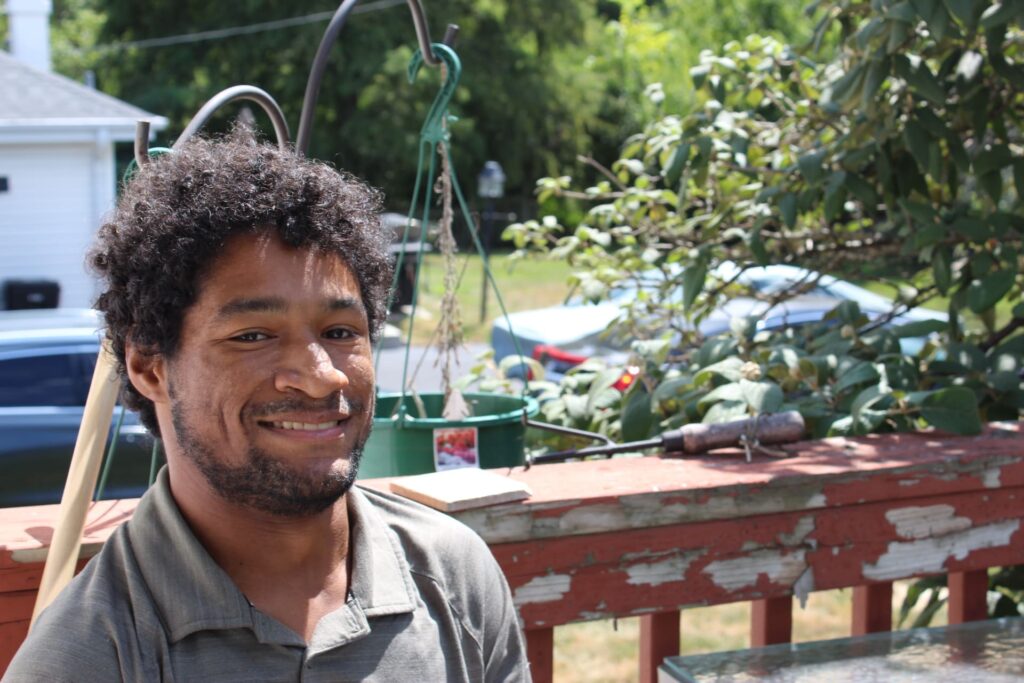
Unlocking Independence Through Assistive Technology
From the moment Marcos was born, his life has been defined by both challenge and resilience. Born on October 18 after a difficult labor, Marcos experienced serious complications at birth and was unable to breathe on his own. Doctors warned his family that they couldn’t predict what impact those early moments might have. Instead, they advised watching for milestones and waiting to see how Marcos developed—an emotional uncertainty that stayed with his family for years. But what could never be measured in milestones alone was Marcos’ determination.
A Drive to Keep Up—and Move Forward
From childhood into adulthood, Marcos has always been eager to participate fully in life. As a kid, he wanted to do what everyone else was doing. If his peers were getting into trouble, Marcos found a way to be right there with them. His curiosity, persistence, and desire for independence were evident early on—and they never faded. Years later, after spending some time away from school, Marcos made a courageous decision: he wanted to return to college. He scheduled a meeting with the college’s Access Office to explore what support might be available if he took that step. It was a turning point.
Removing Barriers Through Support
The Access Office exists to help students with disabilities access higher education on an equal playing field. For Marcos, the need for accommodations was significant. Traditional classroom setups simply didn’t work. His wheelchair couldn’t fit under standard desks, typing independently was physically difficult, and everyday academic tasks required creative solutions. On top of that, many of the supports Marcos once had access to after high school had disappeared—leaving his family to navigate complex systems with limited resources. Like so many families, they encountered long waits, funding limitations, and barriers that delayed progress. But through persistence and advocacy, a new opportunity emerged: access to grant‑funded assistive technology.
Technology That Changes Lives
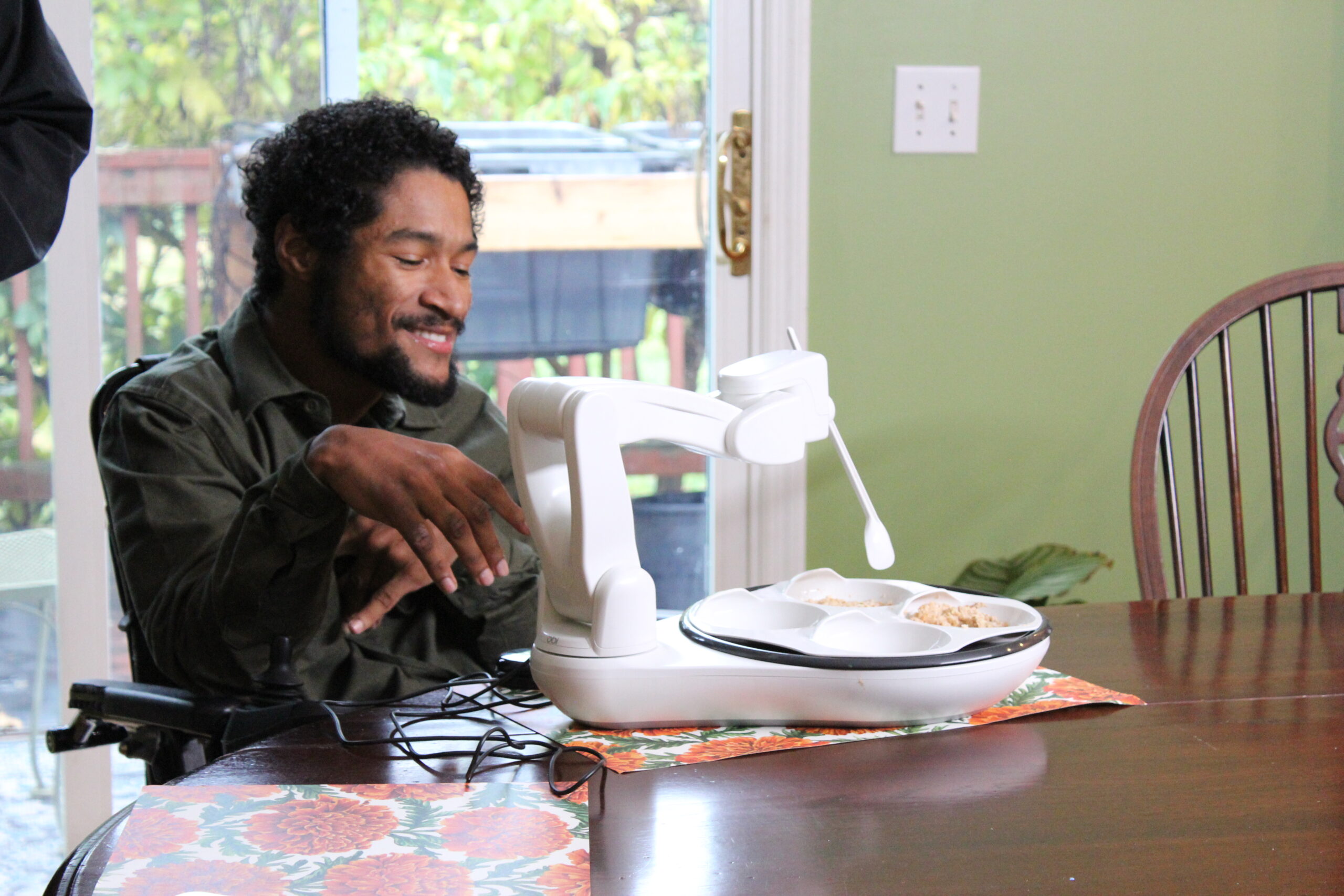
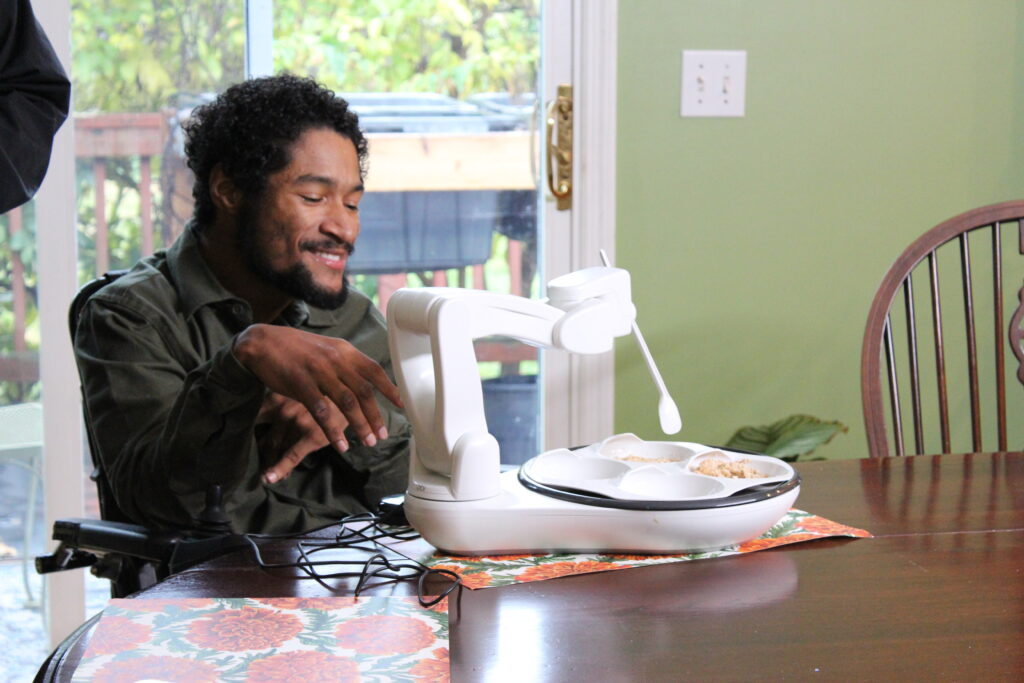
Through this support, Marcos received two critical assistive devices that would dramatically increase his independence. The first was an Obi feeder, a device that allows Marcos to feed himself independently. This was especially meaningful. While his mother had supported him with daily care, Marcos wanted the dignity of doing more on his own. The Obi feeder gave him that freedom—at school, at home, and out in the community. The second device was a high‑tech eye‑gaze communication system. Before receiving it, Marcos communicated by typing with his face or lips on a phone—often requiring patience from others and frequent repetition. With the eye‑gaze device, he can now select words using only his eyes. The system speaks those words aloud in a clear, customized voice. For Marcos, this wasn’t just new technology—it was a new level of connection.
Opening Doors to Education and Community
With his new communication device, Marcos can now more fully participate in college life. Writing papers, communicating with instructors, working with tutors, and engaging with peers are all more accessible. His confidence has grown, and so has his ability to express his ideas, opinions, and goals. The impact has been powerful—not only for Marcos, but for everyone around him. “I think it already is life‑changing,” one staff member shared. “He’s able to do so much more—especially in terms of communication.” For Marcos’ mother, the gratitude is deeply felt. What once seemed impossible is now reality. “It means a lot,” she said. “It really, really means a lot to me.”
Living Our Mission—One Story at a Time
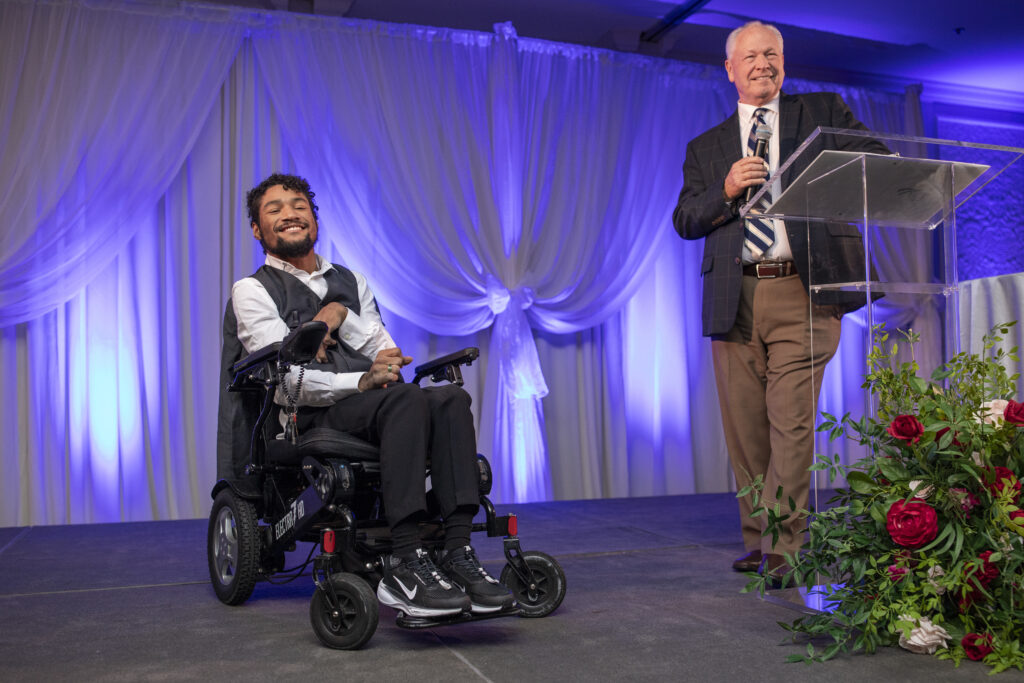
At UCP Heartland, our mission is simple but powerful: to help individuals live to their full potential. Marcos’ journey reflects what that mission looks like in action. Through collaboration, advocacy, and access to assistive technology, barriers were reduced—and independence was expanded. Marcos’ story is one of many, but it serves as a powerful reminder of what’s possible when individuals are supported with the right tools and opportunities. Every day, we work to help people live their best lives. Marcos is living proof that with the right support, potential becomes reality. To see Marcos’ success in action, visit our YouTube channel. Learn more about UCP Heartland and how assistive technology can help you.